Hephzibah and Koinonia
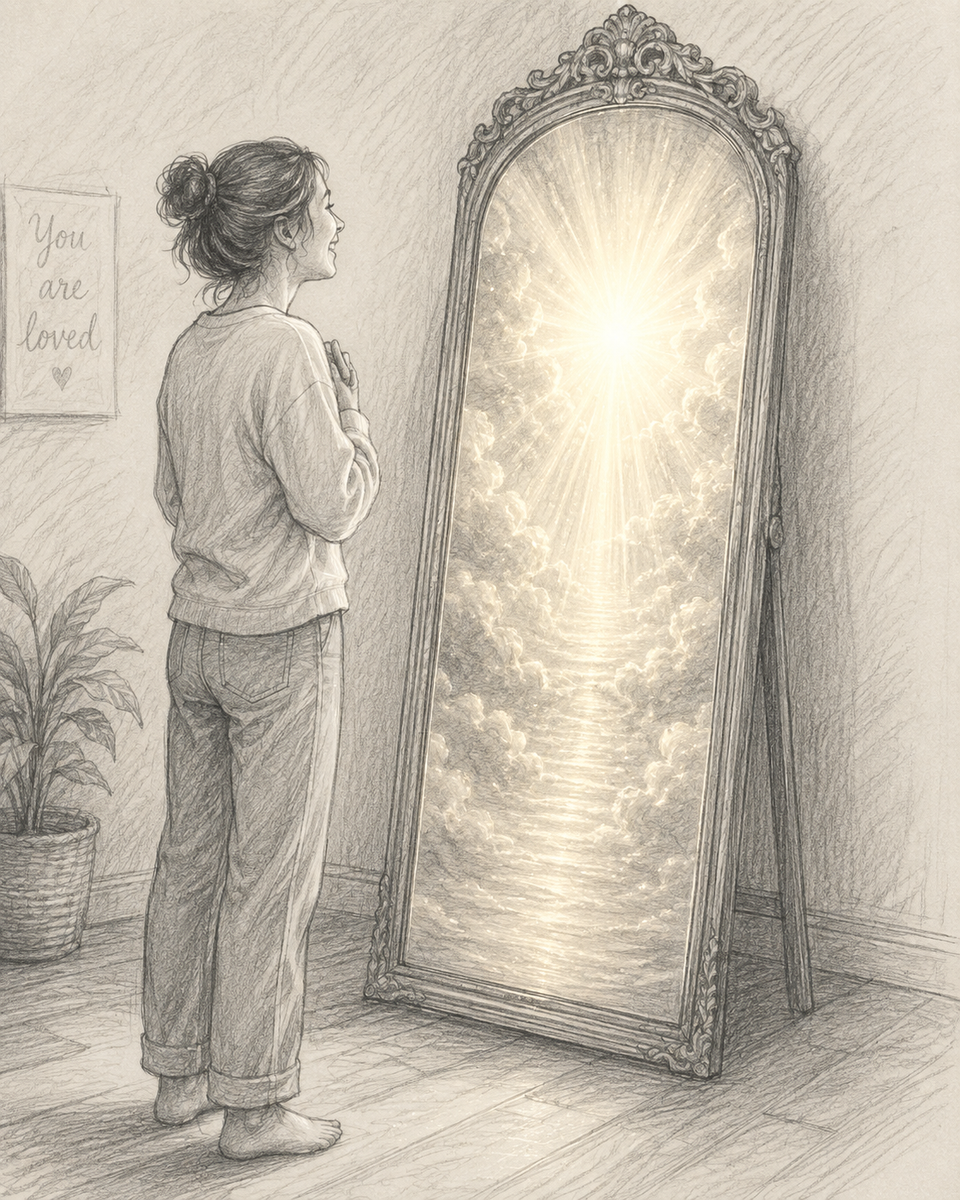
The End of Belonging to Yourself
There is a place in God where you stop needing to know who you are.
That sounds dangerous in a generation obsessed with identity. We have preached identity because people were wounded. We have told the rejected they are accepted, the abandoned they are chosen, the ashamed they are beloved. And we should.
But beloved identity is not the destination.
The Father heals your identity so completely that you finally become free from the need to keep looking at yourself.
Isaiah 62 contains a name that carries more violence than we have allowed it to carry.
Hephzibah.
“My delight is in her.”
God speaks it over a people who had another name.
Forsaken.
Something devastating happens when pain remains long enough. Eventually you stop saying, “I was forsaken,” and begin saying, “I am forsaken.” Experience becomes identity. The wound becomes a mirror, and eventually you cannot imagine yourself apart from what happened to you.
Then God comes into the ruins and does not negotiate with the name. He does not rehabilitate Forsaken or make Forsaken feel better about being Forsaken.
He calls her something she could never have called herself.
Hephzibah.
My delight is in her.
This is more than God changing the way you feel about yourself. This is God taking away your right to name yourself.
And that is where the trouble starts.
The Horse Does Not Choose the Rider
There is something in us like a horse that has never known the reins. Strong, alive, certain that freedom means nobody gets to tell it where to go.
Then the Lord climbs on.
Everything in the horse resists. It bucks because it thinks surrender is death. It runs because it thinks distance is freedom. It fights the reins because it cannot imagine that another will could know its purpose better than its own.
And the Rider stays.
Not because He hates the horse.
Because He knows the horse.
The Lord is not trying to remove its strength. He is teaching its strength where to go.
Much of what we call ourselves is what we learned to become without trusting God. We learned independence and self protection. We learned how to read rooms, how to remain impressive enough to avoid rejection, how to disappear before somebody could abandon us, how to control what frightened us.
Then after enough years we gave those survival mechanisms respectable names like personality, wisdom, discernment, leadership, boundaries, strength.
And Jesus reaches for the reins.
This is where Hephzibah becomes terrifying. The Father is not merely trying to convince you that you are valuable. He is confronting every version of you constructed outside His gaze.
“You have been answering to a name I never gave you.”
His Delight Is Not About You
“My delight is in her.”
We hear those words and immediately turn inward. I am loved. I am chosen. I am valuable.
All true.
But we can receive the revelation of belovedness and still remain fascinated with ourselves. We can make the love of God another mirror and spend our lives examining ourselves in His affection.
How does He see me? What does He think about me? What is my identity? What is my calling?
Even belovedness can become another room where self remains enthroned.
But the gaze of God was never intended to make you more fascinated with yourself. It was intended to make you fascinated with Him.
A child who is secure in his father’s house does not spend the entire day checking the birth certificate. He plays. He eats. He sleeps.
He belongs.
There comes a moment when knowing you are beloved must deliver you from needing to constantly think about being beloved.
Hephzibah is not God handing you a better mirror.
It is God breaking your addiction to mirrors.
You become so settled beneath His gaze that you stop watching yourself being watched.
And now something extraordinary becomes possible.
You can finally see another person.
This is where Hephzibah becomes koinonia.
When Someone Else Becomes More Interesting Than You
Jesus prayed in John 17, “That they may all be one, just as You, Father, are in Me, and I in You.”
We have made this about cooperation.
Jesus was speaking about communion.
The pattern He gives us is not an organization. It is Father and Son.
“In Me.”
“In You.”
This is not proximity. This is participation. This is not Christians learning to tolerate each other. This is human beings being brought into the shared life of God.
Then Jesus says something staggering:
“The glory that You have given Me I have given to them, that they may be one even as We are one.”
Glory is connected to oneness because glory does something no human strategy can accomplish.
Glory makes Someone else more interesting than you.
Perhaps that is why we have struggled to become one. We thought division was the problem, but division is the symptom.
Self consciousness is the disease.
Put a hundred self conscious people in a room and call it church, and every person begins measuring. Who noticed me? Why was she chosen? Does anyone value what I carry? Why was I overlooked?
Then we ask God for unity.
But unity cannot be manufactured among people standing before invisible mirrors. Something has to happen that is greater than us. Someone has to enter the room whose beauty makes us forget to keep checking ourselves.
That is glory.
Koinonia Is Not the Death of Personhood
True koinonia does not mean God erases you. It means He frees you from the exhausting project of possessing yourself.
Father is Father. Son is Son. Spirit is Spirit. Distinction remains within perfect communion.
Biblical oneness is not sameness. It is not absorption. It is not personality disappearing into a religious mass.
God does not destroy personhood.
He destroys autonomy.
There is a throne hidden inside fallen humanity that says:
I belong to me.
That throne survives sermons. It survives worship services. It survives ministry.
It can speak in tongues. It can prophesy. It can build churches. It can feed the poor while secretly remaining king.
Then koinonia comes for the throne.
Paul says it without apology:
“You are not your own.”
Those words offend everything the modern world has taught us to worship. Your life is not your own. Your body is not your own. Your calling is not your own. Even the breath filling your lungs arrived as gift.
And this is where Hephzibah becomes the doorway.
The One who says, “You are not your own,” is the same One who says, “My delight is in her.”
The One who possesses you is the One who delights in you.
Now surrender changes meaning.
The reins are in the hands of Love.
Mine Became Ours
Acts 4 gives us one of the clearest pictures of koinonia. The believers were “of one heart and soul,” and Scripture immediately tells us what that looked like:
“No one said that any of the things that belonged to him was his own.”
Maybe the deepest evidence of glory was not what they felt.
Maybe it was what they stopped calling mine.
My money. My ministry. My reputation. My future. My life.
Glory touches that word.
Not through religious coercion. Not because individuality is evil. But because when God becomes overwhelmingly real, ownership begins to look absurd.
What do you possess that you did not first receive?
Koinonia begins when gratitude becomes greater than possession. Nothing is mine. Everything is gift. Everything is His.
And because it is His, I can finally hold it without clutching it.
Only the Beloved Can Disappear
This may be why Hephzibah must precede koinonia.
We have been asking insecure people to become one. We ask orphans to share. We ask people terrified of being overlooked to celebrate someone else. We ask wounded people to become vulnerable. We ask men and women who secretly believe they are forsaken to stop competing for significance.
But the soul cannot surrender what it believes it must protect in order to survive.
First the Father must speak.
Hephzibah.
My delight is in you.
Again.
Hephzibah.
Until Forsaken stops answering.
Until rejection no longer introduces you. Until being overlooked cannot rename you. Until another person’s beauty does not threaten yours. Until correction does not feel like annihilation.
Until you can be unknown by men without becoming uncertain before God.
Then something dies quietly.
You stop fighting to occupy the center.
Only the beloved can afford to disappear.
Not disappear from existence.
Disappear from obsession with self.
And when an entire people disappear from self obsession at the same time, something appears among them.
A Body.
The Mystery Is Christ
Perhaps we have been asking the wrong question.
Maybe the great question is not:
Who am I?
Maybe it is:
Who is He?
There is a maturity where identity stops being the subject because Christ has become too beautiful.
The horse stops wondering whether it is free.
It feels the Rider.
And goes.
The beloved stops checking whether she is beloved. She sees the Bridegroom and follows. The church stops trying to create unity. She sees the glory and becomes one.
This is koinonia.
Not people staring at one another trying desperately to connect. People looking at Him until they discover they have been joined.
One fire. One bread. One cup. One Spirit. One Body.
Not because personality disappeared.
Because possession changed hands.
This is what hell fears. Not crowded rooms. Not famous ministries. Not impressive platforms.
A people who have forgotten how to belong to themselves.
A people who cannot be divided by offense because their identity is no longer being negotiated in every interaction. A people who can pour themselves out because they know the Source does not run dry. A people who can wash feet without wondering who noticed. A people who can carry glory without needing their name attached to it.
A people who have heard the Father call them Hephzibah so deeply that they no longer need the world to call them anything.
And perhaps this is the mystery hidden between Isaiah 62 and John 17.
The Father delights in us until we become secure enough to surrender. We surrender until we become free from possessing ourselves. We stop possessing ourselves and become available to one another.
And somewhere in that holy loss, the prayer of Jesus begins taking flesh:
“That they may be one, even as We are one.”
The Rider has the reins now.
And the strange thing is this.
What the horse once feared would destroy its freedom has become freedom.
We thought surrender meant losing ourselves. Instead, we lost the thing that kept us from becoming who we were created to be.
Forsaken is dead.
Hephzibah remains.
And Hephzibah has stopped staring at herself.
She has seen the Bridegroom.
If this ministry has encouraged your walk with Christ and you feel led by the Lord to partner with what He is doing, we invite you to prayerfully consider supporting this work. Every gift helps us continue sharing the truth of God’s Word and the hope of the gospel with people around the world.
There is never any obligation to give, only an opportunity to participate in what God is doing. We are deeply grateful for your prayers, your encouragement, and, if the Lord leads, your generosity.
You can give here: Awaken Ministries Donation Page
Member discussion