The Children in the Marketplace
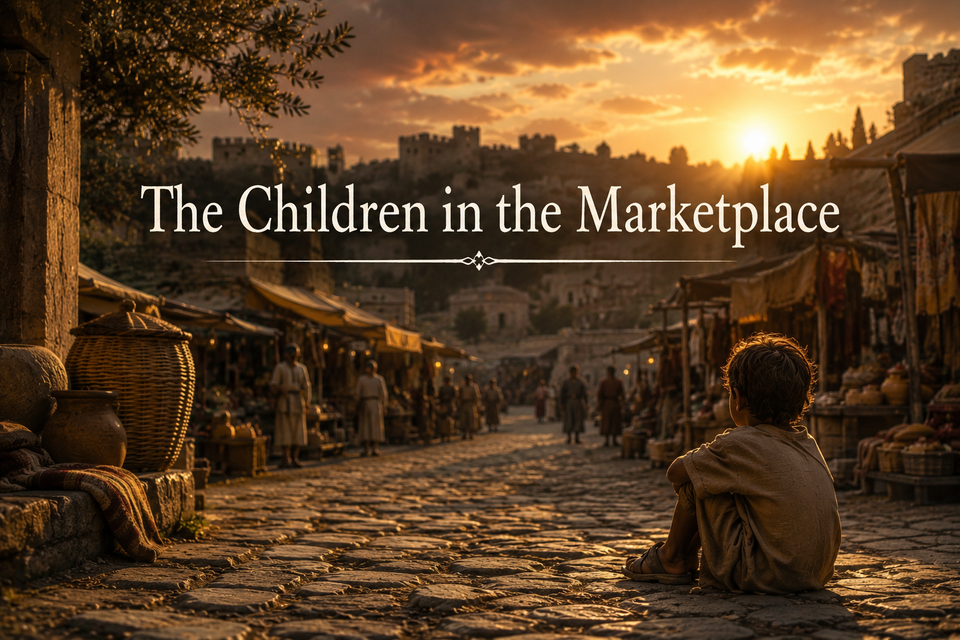
Jesus said His generation was like children sitting in the marketplace, calling out to one another: “We played the flute for you, and you did not dance; we sang a dirge, and you did not mourn.”
This is not a cute proverb. It is an indictment.
The marketplace was the public square. It was where commerce happened, where voices competed, where opinions gathered, where people watched, judged, negotiated, and performed. And Jesus says, “This generation is like children there.” Not kings. Not priests. Not prophets. Children. Immature, demanding, impossible to satisfy.
They wanted God to respond to their song.
That is the heart of the passage.
John came fasting, separated, burning with wilderness severity, and they said, “He has a demon.” Jesus came eating and drinking, reclining at tables, touching sinners, and they said, “He is a glutton and a drunkard, a friend of tax collectors and sinners.”
In other words, the problem was never the messenger’s method. The problem was the generation’s resistance.
They rejected John because he mourned. They rejected Jesus because He danced. They rejected the dirge and the flute. They rejected the fast and the feast. They rejected the wilderness and the table. They rejected the prophet who refused bread and the Messiah who broke bread.
This reveals something terrifying: religious people can disguise rebellion as discernment.
They said John was too intense. They said Jesus was too free. John was too separate; Jesus was too near. John was too hard; Jesus was too gracious. John made them uncomfortable with holiness; Jesus made them uncomfortable with mercy.
But the issue was not John’s austerity or Jesus’ joy. The issue was that both exposed a heart unwilling to surrender.
John confronted their sin. Jesus confronted their self-righteousness.
John said, “Repent.” Jesus said, “Come to Me.”
And they refused both.
That is the marketplace spirit: “God, we will respond when You perform according to our expectations.”
It is the spirit that wants heaven to audition.
It says, “Preach it softer.” Then when it is soft, “Preach it stronger.” It says, “We need holiness.” Then when holiness comes, “That is legalism.” It says, “We need grace.” Then when grace comes, “That is compromise.” It is never satisfied because satisfaction was never the goal. Control was.
The children in the marketplace are not looking for truth. They are looking for agreement.
They do not want to be converted. They want to be catered to.
Jesus is exposing a generation that has become emotionally reactive but spiritually unresponsive. They can critique every sound, but they cannot hear the voice of God. They can analyze every vessel, but they cannot discern visitation. They can say what is wrong with John and what is wrong with Jesus, but they cannot see what is wrong with themselves.
That is the danger.
The most frightening place to be is near enough to the move of God to have an opinion about it, but far enough from surrender to never be changed by it.
John was not a reed shaken by the wind. He was not a man dressed in soft clothing. He was a prophet, and more than a prophet. He stood at the hinge of the ages, announcing the Lamb of God. Yet they dismissed him.
Jesus was Wisdom in flesh, the exact image of the invisible God, eating among the unclean as the Physician of souls. Yet they slandered Him.
Why?
Because when the heart is proud, no manifestation of God is acceptable.
If God thunders, He is too harsh. If God whispers, He is too vague. If God delays, He is absent. If God moves suddenly, He is reckless. If He calls us into hiddenness, we feel forgotten. If He calls us into visibility, we feel exposed.
The marketplace child always has a complaint.
But wisdom is justified by her children.
That final line is the key. Jesus is saying, “You can criticize the method, but the fruit will testify.” John’s ministry produced repentance. Jesus’ ministry produced restoration. Wisdom does not need to win the approval of the marketplace. Wisdom is vindicated by what she births.
This is deeply important for our hour.
We live in a marketplace generation. Everyone has a platform. Everyone has a review. Everyone has a reaction. The public square is no longer a physical marketplace; it is digital, emotional, ideological. And the spirit is the same: “Dance when we play. Mourn when we sing. Perform on demand. Fit our category. Serve our preference.”
But God is not raising up entertainers for the marketplace. He is raising sons and daughters of wisdom.
Sons do not demand that God match their mood. Sons respond to the Father’s voice.
There are seasons when the flute is holy. There are seasons when the dirge is holy. There are times to feast because the Bridegroom is present, and there are times to fast because longing is appropriate. Immaturity demands one sound forever. Wisdom discerns the sound of the moment.
The Pharisees could not receive John because they had no appetite for repentance. They could not receive Jesus because they had no appetite for mercy. Both repentance and mercy are humiliating to the religious ego. Repentance says, “You were wrong.” Mercy says, “You cannot save yourself.”
The proud heart hates both.
But the kingdom comes to the poor in spirit.
The poor in spirit do not sit in the marketplace grading God. They leave the marketplace and go to the wilderness. They leave the marketplace and sit at the table. They let John wound them. They let Jesus heal them.
That is the journey.
John wounds what is false. Jesus heals what is broken.
John empties the room of excuses. Jesus fills the room with grace.
John prepares the way. Jesus becomes the Way.
And blessed is the one who is not offended by Him.
Maybe that is the hidden issue beneath the whole passage: offense. They were offended by John’s severity and offended by Jesus’ tenderness. Offense is often the evidence that God has crossed a line we drew without His permission.
We say we want revival until repentance starts.
We say we want Jesus until He sits with people we avoid.
We say we want freedom until it threatens our reputation.
We say we want truth until it names our compromise.
We say we want mercy until it is extended to our enemies.
The marketplace generation is offended because God will not be managed.
He will not be reduced to our preferred tone. He will not stay in the wilderness just because we fear intimacy. He will not stay at the table just because we hate conviction. He is Lord in the fast and Lord in the feast.
So the call is simple, but costly: stop demanding that God play your song.
Let Him teach you His.
Let the dirge break your heart. Let the flute awaken your joy. Let John confront you. Let Jesus embrace you. Let repentance have its full work. Let mercy have its full glory.
The children in the marketplace remain spectators. But the children of wisdom become witnesses.
And wisdom will be justified.
Not by the critics.
Not by the commentators.
Not by the offended.
Not by the market.
By her children.
If you feel led to partner with what God is doing through this ministry, we invite you to sow into this work as the Spirit leads. Your generosity helps us continue to share His love and truth with others. There is no obligation only an opportunity to join in what God is building. Thank you for considering being a part of this journey.
Member discussion