The Light Is Already On
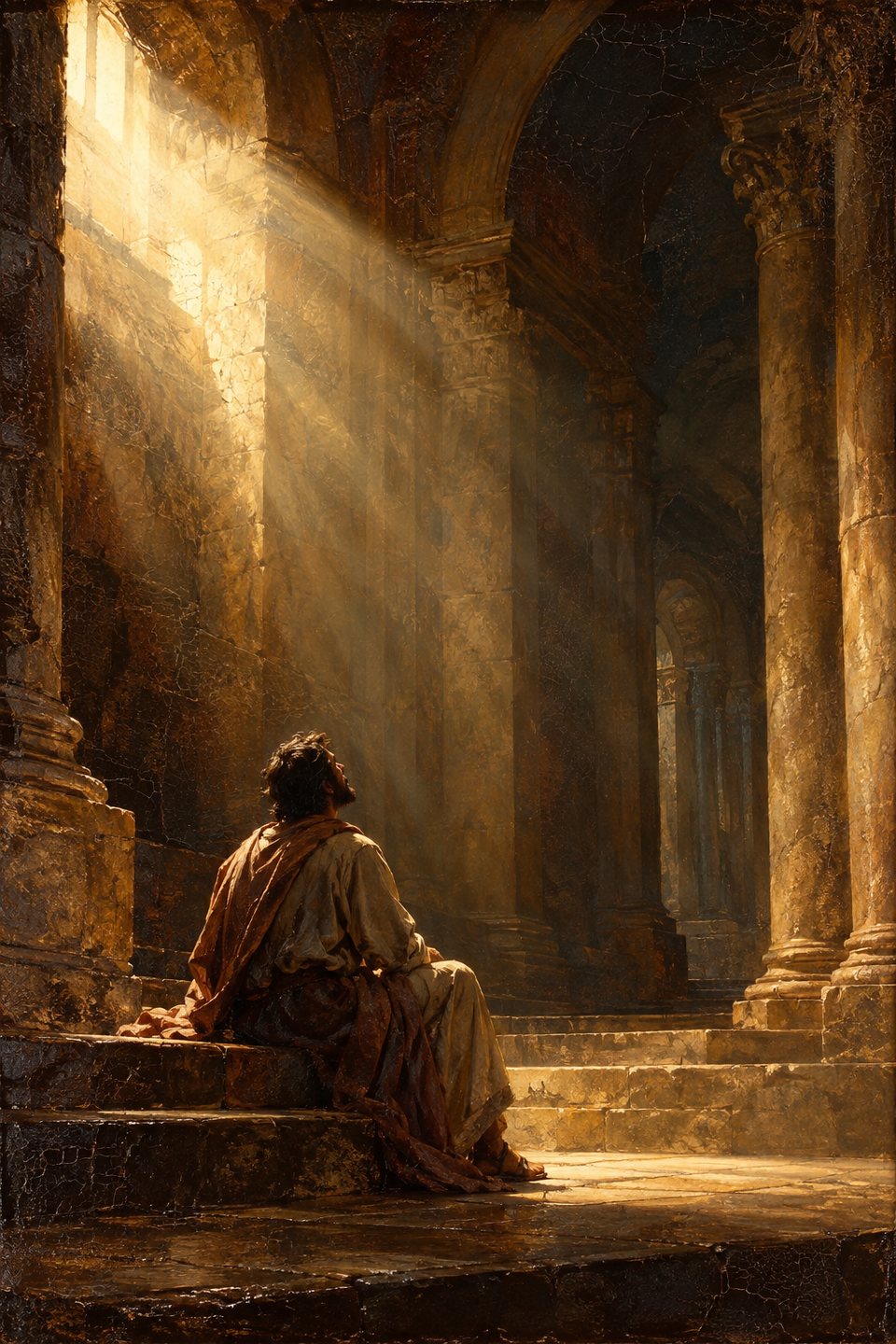
There is something in this prayer in Ephesians chapter one that I believe the Church has walked past too quickly. Paul is praying for people who have already believed on the Lord Jesus Christ, people who have already been blessed with every spiritual blessing in Christ, people who have already been adopted into the family of God. And yet he says, in effect, Father, cause them to know what has happened to them. Cause them to see what You have already done.
Now notice this. In verse eighteen Paul speaks about the eyes of the heart being enlightened, but the Greek word he uses carries the thought of having been enlightened. It is a perfect passive form. It points to something that has happened with continuing results. Paul is speaking to people upon whom God has already acted, and he is praying that they would live in the knowledge of the light that has already come.
I want you to get this. The light has come in Christ, the Spirit has made you alive, and the eyes of the heart have been enlightened. Now Paul prays that you would know what is standing there in the light. We can wear ourselves out asking God to create what grace has already placed in the room. We keep asking Him to turn on a light He has already turned on.
Suppose a fellow owns a house and every light in the house is burning, but he keeps walking around with a little flashlight trying to find his furniture. You would tell him, Put that flashlight down and look around. The problem is not with the electricity. He just has not learned to live by the light that is already filling his house.
You see, revelation enables you to recognize reality. There are things about your life in Christ that are already true, whether your emotions have caught up with them or whether your circumstances appear to agree with them. Paul is praying for the believer to become conscious of what God has accomplished in Christ. You can spend years asking God for something that belongs to the life He has already given you. I know that sounds too simple, but sometimes we make this harder than God made it.
That is why grace has to come before striving. The Father started this whole thing, and before you ever knew how to reach toward Him, He had already moved toward you in His Son. You did not talk Him into loving you or persuade Him to send Jesus. That is where you start. You start with what God did.
Then Paul says something in verse eighteen that we often turn around when we read it. He speaks of the riches of the glory of His inheritance in the saints. Notice whose inheritance it is. His inheritance. In the Greek it reads His inheritance in the saints.
Well, somebody says, Brother, I know God is valuable to me. Yes, but have you ever considered that this verse is telling you His people are precious to Him? We spend a great deal of time talking about what we receive from God, and rightly so. Paul opens another window here and lets us see something from the Father’s side. There is an inheritance that belongs to God, and that inheritance is found in His saints.
God has chosen to locate His inheritance in a redeemed people. He is gathering a family who bear the image of His Son and forming a people in whom Christ can be revealed. The Father looks at the redeemed and sees the fruit of what He purposed in Jesus. When God looks at His people, He sees sons and daughters purchased by the blood of His Son, carrying His Spirit, and being formed into the image of Christ. Have you ever stopped and thought about God looking at you that way?
That will do something to shame if you believe it. Shame tells you that God saved you reluctantly. You can sing about the blood on Sunday morning and still go home believing the Father is disappointed that you are in His house. Now that is a lie, and you need to quit believing it. Paul says there are riches of glory connected with God’s inheritance in the saints, so you had better learn to see yourself through the work of Jesus instead of through the accusations in your head.
Holiness grows differently when you understand that. You stop working to make yourself somebody God could want, because you have begun to see the dignity of belonging to Him.
Everything contrary to your new nature begins to look foreign to the life you have received. Sin begins to lose its attraction when Christ becomes beautiful. A son who knows whose house he lives in does not have to spend every morning wondering whether he belongs there. He just gets up and lives in the house.
Then we come to verse nineteen, and Paul seems to run out of ordinary language. He starts piling words upon words to describe God’s power toward us who believe. In the Greek text there are four significant words gathered into this statement. Dunamis is power, energeia is working, kratos is strength, and ischus is might. Paul stacks four words together because one word does not seem big enough for what God did when He raised Jesus from the dead. It is almost as though Paul reaches for one word and says, That does not say enough, so he reaches for another, and then another, and then another. Stay with me here. He wants you to get some idea of the same power that raised Jesus. Then he says this power, this working, this strength, this might, is directed toward us who believe. That is where Paul puts it. Toward us.
That resurrection is where Paul directs our attention. God took Jesus out of death, raised Him, seated Him at His right hand, and placed Him far above rule, authority, power, dominion, and every name that can be named. If you want to know what this power can do, look at the empty tomb. Death got hold of Jesus, and God’s power raised Him right out of it. So what are we so afraid of?
We have spent too much time measuring Jesus by the size of what we are facing. Paul teaches us to measure what we are facing by the position of Jesus. And where is Jesus? He is seated at the right hand of the Father, far above every rule and authority and power and dominion. Friend, heaven is not nervous about the thing that has you worried.
Then Paul brings the Church right into the picture. God gave Christ as Head over all things to the Church, and Paul calls the Church His body. You cannot understand the body by staring at the body all day. You have to look at the Head. The Church lives because Jesus lives, and everything the Church has comes from Him.
Verse twenty three calls the Church His body and then calls the Church His fullness. The Greek word is pleroma, fullness, carrying the sense of that which fills or completes. The text puts the body of Christ right there with the fullness of the One who fills all in all. Paul is saying the Church is not a bystander. The Church is the place where Jesus is fully at home.
The Son of God is complete in His divine nature, and He has chosen to show His life through people who belong to Him. That is what a body does. It gives expression to the life that is in it. So when you look at the Church, do not get stuck staring at human weakness. Look at Jesus.
Let me say it another way. Christ intends to express His life through His body. The One who fills all things has chosen a people through whom His life becomes visible in the earth. His compassion gets hands. His mercy gets a voice. His love walks into rooms. Nobody has ever seen Jesus in the earth except through a body.
Now that gets very practical. When you walk into your place of work conscious that you belong to Christ, you carry yourself differently because your life has a Source beyond your own strength. At home, when patience is tested and nobody is watching, His life can come through in the way you speak and the way you love. In a hard season, you can stand there with tears in your eyes and still know that the life of the risen Christ has not left His body.
The day Jesus went into the grave, you went with Him, and the day He walked out, you walked out in Him. Your old life went into His death. His resurrection has become the ground you stand on, and now you belong to His body. The old story does not get the final word over who you are. Your life is joined to the risen Head, and you are learning to live from that union every day.
Look at the seated Christ until the thing that frightened you loses its size. Shame has talked long enough, and you will learn to hear what the Father says about His inheritance instead. Fear cannot keep ruling a heart that is waking up to resurrection power, and as you quit wearing yourself out trying to become what grace has already made you, striving will begin to loosen its grip. Friend, lift your eyes to the seated Christ, then walk into your home, your work, and your hard season knowing whose body you belong to and whose life is working in you.
The room is already full of light. Open your eyes and live there.
There is something in this prayer in Ephesians chapter one that I believe the Church has walked past too quickly. Paul is praying for people who have already believed on the Lord Jesus Christ, people who have already been blessed with every spiritual blessing in Christ, people who have already been adopted into the family of God. And yet he says, in effect, Father, cause them to know what has happened to them. Cause them to see what You have already done.
Now notice this. In verse eighteen Paul speaks about the eyes of the heart being enlightened, but the Greek word he uses carries the thought of having been enlightened. It is a perfect passive form. It points to something that has happened with continuing results. Paul is speaking to people upon whom God has already acted, and he is praying that they would live in the knowledge of the light that has already come.
I want you to get this. The light has come in Christ, the Spirit has made you alive, and the eyes of the heart have been enlightened. Now Paul prays that you would know what is standing there in the light. We can wear ourselves out asking God to create what grace has already placed in the room. We keep asking Him to turn on a light He has already turned on.
Suppose a fellow owns a house and every light in the house is burning, but he keeps walking around with a little flashlight trying to find his furniture. You would tell him, Put that flashlight down and look around. The problem is not with the electricity. He just has not learned to live by the light that is already filling his house.
You see, revelation enables you to recognize reality. There are things about your life in Christ that are already true, whether your emotions have caught up with them or whether your circumstances appear to agree with them. Paul is praying for the believer to become conscious of what God has accomplished in Christ. You can spend years asking God for something that belongs to the life He has already given you. I know that sounds too simple, but sometimes we make this harder than God made it.
That is why grace has to come before striving. The Father started this whole thing, and before you ever knew how to reach toward Him, He had already moved toward you in His Son. You did not talk Him into loving you or persuade Him to send Jesus. That is where you start. You start with what God did.
Then Paul says something in verse eighteen that we often turn around when we read it. He speaks of the riches of the glory of His inheritance in the saints. Notice whose inheritance it is. His inheritance. In the Greek it reads His inheritance in the saints.
Well, somebody says, Brother, I know God is valuable to me. Yes, but have you ever considered that this verse is telling you His people are precious to Him? We spend a great deal of time talking about what we receive from God, and rightly so. Paul opens another window here and lets us see something from the Father’s side. There is an inheritance that belongs to God, and that inheritance is found in His saints.
God has chosen to locate His inheritance in a redeemed people. He is gathering a family who bear the image of His Son and forming a people in whom Christ can be revealed. The Father looks at the redeemed and sees the fruit of what He purposed in Jesus. When God looks at His people, He sees sons and daughters purchased by the blood of His Son, carrying His Spirit, and being formed into the image of Christ. Have you ever stopped and thought about God looking at you that way?
That will do something to shame if you believe it. Shame tells you that God saved you reluctantly. You can sing about the blood on Sunday morning and still go home believing the Father is disappointed that you are in His house. Now that is a lie, and you need to quit believing it. Paul says there are riches of glory connected with God’s inheritance in the saints, so you had better learn to see yourself through the work of Jesus instead of through the accusations in your head.
Holiness grows differently when you understand that. You stop working to make yourself somebody God could want, because you have begun to see the dignity of belonging to Him.
Everything contrary to your new nature begins to look foreign to the life you have received. Sin begins to lose its attraction when Christ becomes beautiful. A son who knows whose house he lives in does not have to spend every morning wondering whether he belongs there. He just gets up and lives in the house.
Then we come to verse nineteen, and Paul seems to run out of ordinary language. He starts piling words upon words to describe God’s power toward us who believe. In the Greek text there are four significant words gathered into this statement. Dunamis is power, energeia is working, kratos is strength, and ischus is might. Paul stacks four words together because one word does not seem big enough for what God did when He raised Jesus from the dead. It is almost as though Paul reaches for one word and says, That does not say enough, so he reaches for another, and then another, and then another. Stay with me here. He wants you to get some idea of the same power that raised Jesus. Then he says this power, this working, this strength, this might, is directed toward us who believe. That is where Paul puts it. Toward us.
That resurrection is where Paul directs our attention. God took Jesus out of death, raised Him, seated Him at His right hand, and placed Him far above rule, authority, power, dominion, and every name that can be named. If you want to know what this power can do, look at the empty tomb. Death got hold of Jesus, and God’s power raised Him right out of it. So what are we so afraid of?
We have spent too much time measuring Jesus by the size of what we are facing. Paul teaches us to measure what we are facing by the position of Jesus. And where is Jesus? He is seated at the right hand of the Father, far above every rule and authority and power and dominion. Friend, heaven is not nervous about the thing that has you worried.
Then Paul brings the Church right into the picture. God gave Christ as Head over all things to the Church, and Paul calls the Church His body. You cannot understand the body by staring at the body all day. You have to look at the Head. The Church lives because Jesus lives, and everything the Church has comes from Him.
Verse twenty three calls the Church His body and then calls the Church His fullness. The Greek word is pleroma, fullness, carrying the sense of that which fills or completes. The text puts the body of Christ right there with the fullness of the One who fills all in all. Paul is saying the Church is not a bystander. The Church is the place where Jesus is fully at home.
The Son of God is complete in His divine nature, and He has chosen to show His life through people who belong to Him. That is what a body does. It gives expression to the life that is in it. So when you look at the Church, do not get stuck staring at human weakness. Look at Jesus.
Let me say it another way. Christ intends to express His life through His body. The One who fills all things has chosen a people through whom His life becomes visible in the earth. His compassion gets hands. His mercy gets a voice. His love walks into rooms. Nobody has ever seen Jesus in the earth except through a body.
Now that gets very practical. When you walk into your place of work conscious that you belong to Christ, you carry yourself differently because your life has a Source beyond your own strength. At home, when patience is tested and nobody is watching, His life can come through in the way you speak and the way you love. In a hard season, you can stand there with tears in your eyes and still know that the life of the risen Christ has not left His body.
The day Jesus went into the grave, you went with Him, and the day He walked out, you walked out in Him. Your old life went into His death. His resurrection has become the ground you stand on, and now you belong to His body. The old story does not get the final word over who you are. Your life is joined to the risen Head, and you are learning to live from that union every day.
Look at the seated Christ until the thing that frightened you loses its size. Shame has talked long enough, and you will learn to hear what the Father says about His inheritance instead. Fear cannot keep ruling a heart that is waking up to resurrection power, and as you quit wearing yourself out trying to become what grace has already made you, striving will begin to loosen its grip. Friend, lift your eyes to the seated Christ, then walk into your home, your work, and your hard season knowing whose body you belong to and whose life is working in you.
The room is already full of light. Open your eyes and live there.
You can give here: Awaken Ministries Donation Page
Member discussion