When the Altars Fall and the Voices Go Quiet
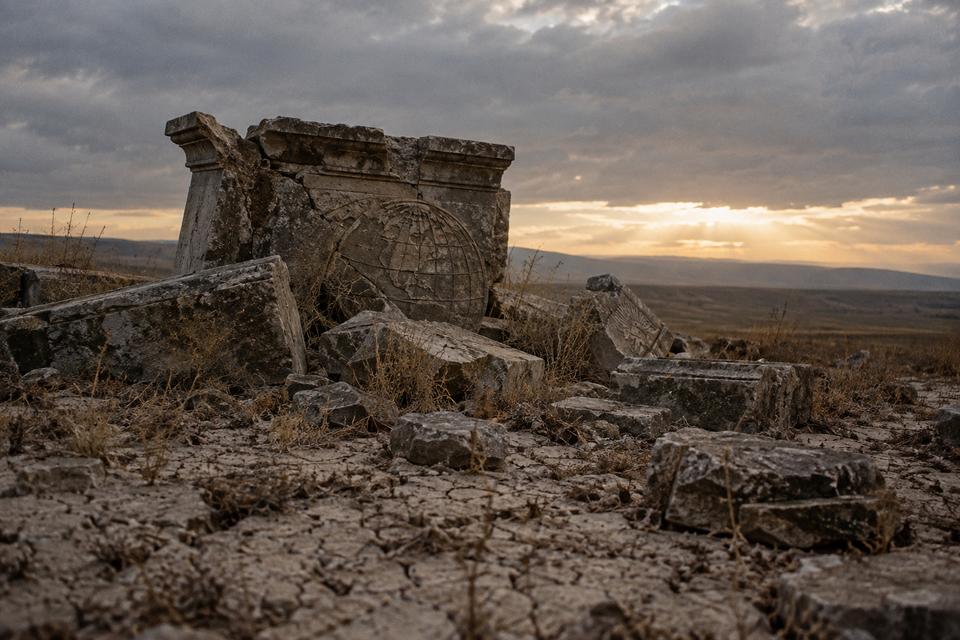
There are altars in people’s lives that never look like altars.
When we hear that word, most of us think about something religious. We picture a shrine, an idol, maybe stones piled together somewhere. But an altar does not have to look religious. It can look like a bank account. It can be a career, a relationship, or an ordinary phone sitting beside the bed.
The question is what we have asked that thing to do for us.
If I am asking something to tell me who I am, whether I am safe, whether I matter, and whether tomorrow is going to be all right, then I probably need to stop and think about the place it has taken in my life.
You see this all through Acts. The gospel did not enter empty cities. Those cities already had gods, customs, businesses, fears, traditions, and their own explanations for how life worked. Then people started preaching Jesus, and some things that had been sitting comfortably for years got disturbed.
Stephen talks about this in Acts 7 when he tells Israel’s story. These were people with Abraham in their history, Moses in their history, and the Red Sea in their history. Yet Stephen still had to talk about idolatry. He mentioned the golden calf, Moloch, and Rephan.
That has always made me think. You can remember what God did ten years ago and still be leaning pretty hard on something else today.
Moloch was connected with the terrible sacrifice of children. We ought to recoil from that. But there is something else there worth noticing. Idols consume things.
A man can tell himself for twenty years that he works every hour God sends because he loves his family. And he may love them very much. But if his children get whatever energy remains after ambition has eaten first, something has gotten out of place. They may have a fine house and good clothes and every opportunity their father can buy, yet hardly remember when he last sat at the table and listened to them without checking the time.
Work is not the problem. Scripture certainly does not teach that. Sometimes the trouble is farther down where nobody can see it. A man may have been carrying around a sentence since he was young: If I am not accomplishing something, I am not worth much.
A lot of our behavior has a sentence underneath it.
The serpent worked that way in Genesis. He started talking. Before Eve reached for anything, a question had already been raised about the Word and character of God.
Can God really be trusted?
We still have to answer that question. Can He be trusted with our children and our money? Can He be trusted when obedience seems to cost more than we expected? Can He be trusted with a future He has not explained?
When we decide He cannot, we start looking around for something we can get our hands on.
Acts 16 tells about a slave girl with a spirit of divination. She followed Paul and his companions, and what she said sounded spiritual. That is the interesting part. She was not following them around calling them frauds. What she said actually sounded supportive.
Paul still discerned that the source was wrong.
So accuracy alone is not enough. Neither is an unusual experience, secret information, or a prediction that turns out correctly. The Christian still comes back to Christ, Scripture, and the fruit of what is being received.
There is another detail in that story that is easy to pass over. When the girl was delivered, her owners became angry because they had been making money from her condition. Her bondage paid somebody.
There is still money in keeping people afraid. Keep somebody frightened about tomorrow and eventually somebody will sell him certainty. Keep somebody dissatisfied with her appearance and there will be another product waiting. You can see this without becoming suspicious of every business in town. That is not what I mean. It is simply worth noticing how profitable human fear can be.
And fear particularly dislikes an unknown future.
That is one reason people reach for fortune telling, astrology, divination, charms, or spiritual practices that promise knowledge and protection. Faith has to learn to live without possessing tomorrow. There are times when the most truthful thing we can say is, I do not know what is coming. I know enough about God to obey Him today.
Simon in Acts 8 had been accustomed to spiritual power of another kind and to people paying attention to him. Then he saw the genuine work of God and offered money for the ability to minister that power.
His old way of thinking had followed him into his new religious surroundings.
We can do something similar. A person starts serving because he loves Jesus. After a while he notices who gets invited where, whose work is growing, who is being recognized. It gets mixed up before he realizes it.
The Holy Spirit cannot be purchased, and ministry was never intended to settle the question of whether we are important. There is a lot to be said for doing something good that nobody knows you did. I suppose most of us could stand a little more of that.
We also need to distinguish conviction from accusation.
The Holy Spirit deals with us when we are wrong. Sometimes very plainly. If you lied, He may deal with you about the lie and about making it right. Accusation takes the same failure and starts telling you what kind of person you are and what you will always be.
Peter knew failure. He denied Jesus three times. There was no need to pretend it was a small matter. Yet in John 21, the risen Christ met Peter beside a charcoal fire, spoke with him, and entrusted His sheep to him again.
We should repent when we sin. We should apologize when we owe somebody an apology and accept consequences when they belong to us. But Peter did not spend the rest of his life beside the first charcoal fire.
Acts 19 gives us another picture. People who had practiced magic brought their books together and burned them. Their repentance eventually involved their possessions.
Sometimes you quit talking about closing a door and close it.
That does not mean Christians should become superstitious about ordinary objects. We are not supposed to spend our lives frightened of things. We deal honestly with our own practices and whatever we have kept around as a road back to them. Then we go on with God.
I think Christians can get themselves into trouble here by becoming too interested in deception. Every thought gets examined. Every strange feeling becomes a spiritual event. A bad dream can occupy three days.
Or maybe that is not quite the right way to say it. Discernment matters. Acts makes that obvious. But the point of discernment is not to make us experts in darkness. We are supposed to know the Shepherd.
Jesus said His sheep know His voice. That familiarity grows through Scripture, prayer, obedience, fellowship, and simply walking with God for a while. You go through enough seasons where you thought everything was coming apart and later discover that He had not left you, and you begin to recognize something about His ways.
Peter’s experience in Acts 10 is helpful here. He received a remarkable vision and did not immediately understand it.
He pondered it.
I like that detail. Peter apparently did not feel obligated to have an interpretation ready before supper. God was not nervous about the delay. Circumstances unfolded, Peter obeyed, and the meaning became clearer.
There is nothing wrong with saying, I may be wrong.
Sometimes what we call discernment may even be an old wound talking. A person who has been betrayed can start interpreting silence as rejection. Somebody who remembers being poor as a child may have plenty of money forty years later and still feel frightened whenever the account drops.
Jesus can deal with those places patiently. He does not have to shame a frightened person in order to free him from fear.
Then there is Paul and Silas in Acts 16. They had been beaten and imprisoned. At midnight they were praying and singing, and an earthquake opened the doors and loosened the chains.
If I had been writing the story, I might have had them running out the door right there.
Paul stayed.
The jailer thought the prisoners had escaped and was preparing to kill himself. Paul called out and stopped him. Before the night was over, the jailer was hearing the gospel, wounds were being washed, and food was on the table.
The open prison door was not the only thing that mattered that night. Paul was free enough to think about the man who had been guarding him. I have always found that part harder to forget than the earthquake.
All of this is why removing an idol is not the whole Christian life. The heart does not do very well as an empty room.
Paul tells us in Romans to present our bodies as living sacrifices. That expression is wonderfully practical when you think about it. A living sacrifice gets out of bed the next morning. It makes breakfast, goes to work, pays bills, answers messages, talks with the family, and makes decisions when nothing particularly spiritual seems to be happening.
That is where consecration has to live.
Money needs to be money. Work needs to be work. Human approval is pleasant, but it is poor food for the soul. We make plans for tomorrow because wisdom tells us to, and then at some point we have to leave tomorrow with God.
And when we get something wrong, we come back.
I do not think the answer is spending our lives trying to identify every counterfeit voice. I would rather become better acquainted with the Shepherd. Open the Word. Pray. Stay around mature believers. Tell the truth when you are wrong. Forgive people. Do what you already know to do.
There will still be things we cannot explain. There will be days when God seems very near and ordinary Tuesdays when prayer feels ordinary too.
But He is still there.
Perhaps after walking with Him for a while, you look around and realize something you once thought you could never live without does not have quite the same hold anymore. You did not notice exactly when it happened.
You just kept following the Shepherd.
And that old altar is still lying where it fell.
Jesus Christ is Lord.
If this ministry has encouraged your walk with Christ and you feel led by the Lord to partner with what He is doing, we invite you to prayerfully consider supporting this work. Every gift helps us continue sharing the truth of God’s Word and the hope of the gospel with people around the world.
There is never any obligation to give, only an opportunity to participate in what God is doing. We are deeply grateful for your prayers, your encouragement, and, if the Lord leads, your generosity.
You can give here: Awaken Ministries Donation Page
Member discussion