Faith Sees the Kingdom Before It Sees the Miracle
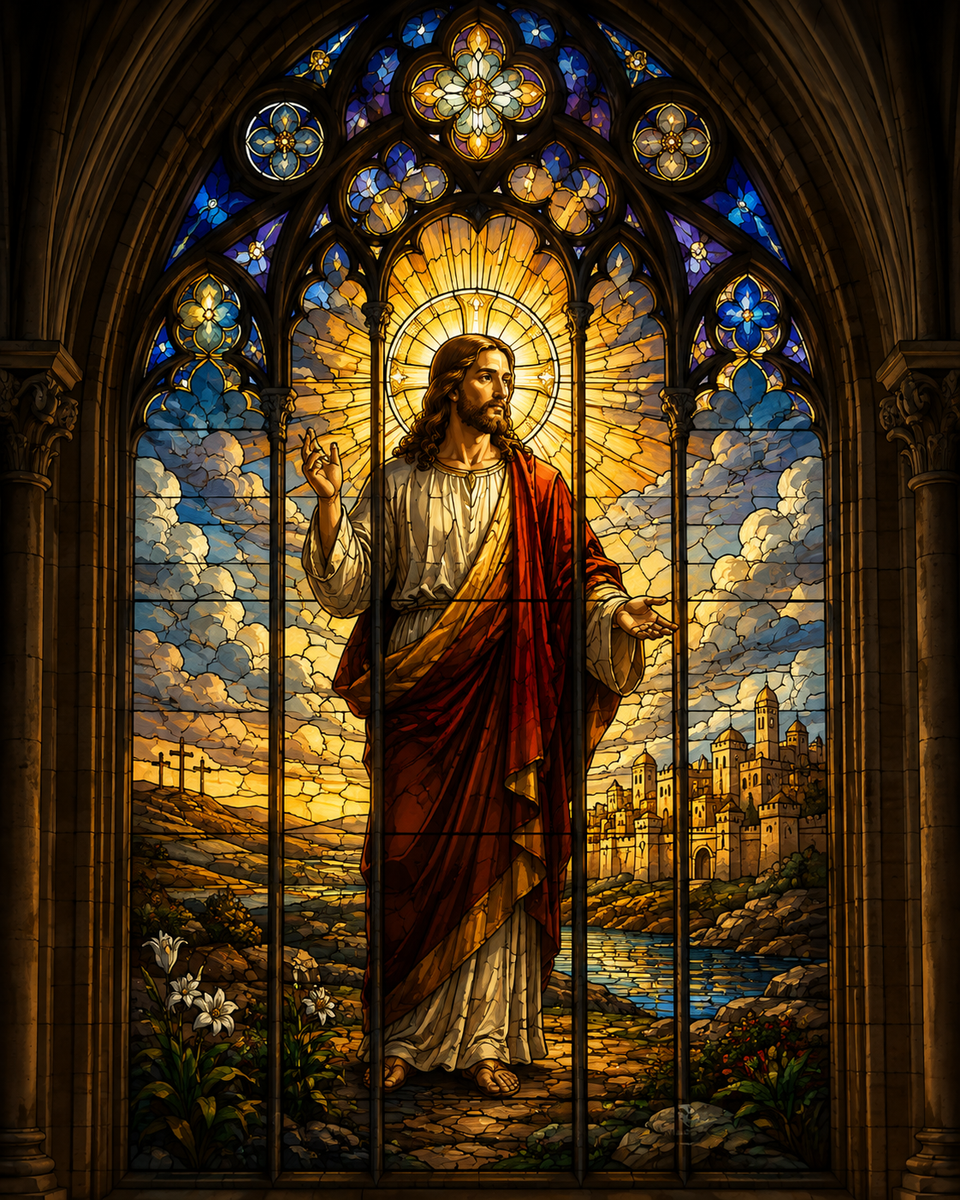
“When Jesus heard it, He marveled, and said to those who followed, ‘Assuredly, I say to you, I have not found such great faith, not even in Israel.’”
Matthew 8
There are only a handful of moments in the Gospels where we are told that Jesus marveled. That fact alone should cause every student of Scripture to pause and pay attention. The Son of God, through whom all things were made, stood astonished by the response of one man. The remarkable part of the story is not simply that Jesus marveled. The remarkable part is that He marveled at a Roman centurion instead of someone within Israel, the nation that had been entrusted with the Law, the prophets, and the promises of the coming Messiah.
For years I read this passage as though the greatness of the centurion’s faith was found only in his belief that Jesus could heal from a distance. That is certainly part of the story, but it cannot be the whole story. Jesus had already healed many people. Crowds had gathered because they believed He could perform miracles. If believing that Jesus possessed supernatural power was all that was required for great faith, then why did Jesus single out this man above everyone else? There is something deeper happening beneath the surface of the text.
The answer begins to emerge when we stop focusing only on the miracle and begin listening carefully to the words of the centurion. Every statement he makes reveals how he understood Jesus. His confidence did not rest merely in what Jesus could do. His confidence rested in who Jesus was. Before the miracle ever occurred, the centurion had already recognized the authority of the Kingdom standing before him.
The centurion said, “For I also am a man under authority, having soldiers under me. I say to this one, ‘Go,’ and he goes. I say to another, ‘Come,’ and he comes. I say to my servant, ‘Do this,’ and he does it.” It is easy to overlook the first part of that statement because our attention is naturally drawn to the authority he exercised. Yet the first thing he tells Jesus is not that he possesses authority. He says that he lives under authority.
That detail is not accidental. It is the key to understanding everything that follows. The centurion knew that authority is never self produced. It is always delegated. His commands carried weight because they represented the authority of a kingdom greater than himself. When a soldier obeyed his voice, he was ultimately responding to the authority of Rome that stood behind that voice.
One word in the centurion’s statement deserves special attention. He says, “I also am a man under authority.” The word also invites us to compare his life with the life of Jesus. It is as though the centurion is saying, “I recognize something in You because I know what it means to live under authority myself.” He saw in Jesus the same pattern that governed his own life, only on an infinitely greater scale.
This is astonishing because the centurion perceived something that many within Israel had missed. The religious leaders often questioned where Jesus received His authority. They demanded signs and challenged His every action. The centurion never asked those questions because he had already found the answer. He recognized that Jesus spoke and acted as One who lived completely under the authority of His Father.
Years later, Jesus would make this reality unmistakably clear. He declared, “The Son can do nothing of Himself, but what He sees the Father do.” He also said, “The words that I speak to you I do not speak on My own authority, but the Father who dwells in Me does the works.” These statements reveal that Jesus never ministered independently. His miracles flowed from perfect union with the Father and complete submission to His will.
The centurion understood this before most people did. He did not possess the education of a scribe or the training of a Pharisee. He had not spent years studying the Torah. Yet spiritual perception is not measured by information alone. Sometimes the heart that is willing to recognize truth sees what the educated mind overlooks.
This helps explain why Jesus constantly preached the Kingdom of God. He did not come merely to introduce a new religious movement. He came announcing that the reign of Heaven had broken into the earth. Every healing, every deliverance, and every miracle was evidence that another government was confronting the brokenness of this world. The miracles were never the destination. They were signs pointing to the King and His Kingdom.
This is where the story becomes deeply personal. The crowds saw miracles. The centurion saw the Kingdom. The crowds admired extraordinary power. The centurion recognized divine authority. The crowds celebrated what Jesus could do. The centurion discerned who Jesus truly was.
That distinction changes the way we understand faith. Faith is certainly trusting God, but trust always rests upon revelation. The centurion trusted Jesus because he recognized His authority. His faith did not begin with a miracle. His faith began with a revelation of the King.
This also explains why distance was never an obstacle in the centurion’s mind. If Jesus were merely a gifted healer, perhaps He would need to stand beside the servant. If Jesus were simply another prophet, perhaps His physical presence would be required. But the centurion had already concluded that Jesus exercised the authority of Heaven itself. If the authority of Heaven was present in His word, then one command was enough.
Kings do not need to travel to every corner of their kingdom in order to rule. Their authority extends wherever their word is received. The centurion understood this principle because he lived within an earthly kingdom. He simply recognized that Jesus represented a Kingdom infinitely greater than Rome. What Rome demonstrated in the natural, Heaven fulfilled perfectly in the Spirit.
Hebrews tells us that faith is the assurance of things hoped for and the conviction of things not seen. Faith does not ignore visible reality. Rather, it recognizes that visible reality is not the highest reality. The Kingdom of God is unseen, but it is no less real. In fact, it is more enduring than everything we can touch with our hands or measure with our senses.
Perhaps this is why Paul prayed that the eyes of the believers’ hearts would be enlightened. He did not pray merely for more knowledge. He prayed for revelation. Information alone can produce religious confidence, but revelation transforms the way a person sees the world. The centurion illustrates what happens when the eyes of the heart are opened to the reality of the Kingdom.
Too often we define faith as believing that God can do the impossible. While that is certainly true, the centurion invites us into something even deeper. Faith is learning to interpret every circumstance through the authority of King Jesus rather than interpreting King Jesus through our circumstances. The miracle was not the foundation of his faith. The authority of Christ was.
This perspective changes the questions we ask. Instead of beginning with whether God is able, we begin with who God is. Instead of measuring Heaven by the limitations of earth, we measure earth by the authority of Heaven. Our confidence grows because our vision has changed. We begin to see reality through the reign of Christ instead of through the pressure of our circumstances.
The New Testament repeatedly reminds believers that Christ has been given all authority in Heaven and on earth. It also teaches that those who belong to Him have been transferred into the Kingdom of His beloved Son. These truths are not abstract theological ideas. They are invitations to live every day with an awareness that the reign of Christ is present and active. The Kingdom is not merely a future hope. It is a present reality breaking into ordinary life through the presence of the King.
This does not mean believers deny suffering or pretend that difficulties do not exist. The centurion certainly did not deny that his servant was desperately ill. He acknowledged the problem honestly while refusing to make the problem the highest authority in the situation. He believed that the word of Jesus carried greater authority than the sickness confronting his servant. His faith elevated Christ above the crisis.
Perhaps that is the lesson the Church must recover today. We often become fascinated with methods, formulas, and techniques while overlooking the Person of Jesus Himself. The Kingdom has never advanced because people mastered religious principles. It advances because men and women behold the King until His authority shapes the way they think, pray, and live. Everything begins with seeing Him rightly.
The story ends where it began, with Jesus marveling. He did not marvel because someone hoped for a miracle. He marveled because one man recognized the government of Heaven standing before him. Before the servant was healed, the centurion had already seen the Kingdom. That is why Jesus called it great faith.
Great faith is not first measured by the size of the miracle that follows. Great faith is measured by the clarity with which we see the King. When Christ is rightly seen, trust becomes natural, obedience becomes joyful, and impossible circumstances begin to bow before the authority of His word. The crowds saw miracles. The centurion saw the Kingdom. Jesus saw faith. That is the invitation still extended to every believer today.
If this ministry has encouraged your walk with Christ and you feel led by the Lord to partner with what He is doing, we invite you to prayerfully consider supporting this work. Every gift helps us continue sharing the truth of God’s Word and the hope of the gospel with people around the world.
There is never any obligation to give, only an opportunity to participate in what God is doing. We are deeply grateful for your prayers, your encouragement, and, if the Lord leads, your generosity.
You can give here: Awaken Ministries Donation Page
Member discussion